

08 Feb Scope of Variables in Java
In Java, the scope of a variable refers to the portion of the code where the variable is accessible and can be used. There are several types of variable scopes in Java:
- Local Variables
- Instance Variables
- Class/ Static Variables
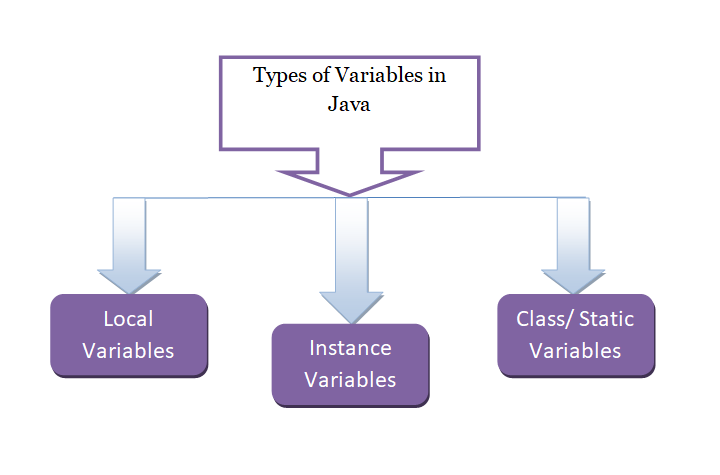
Local Variables
A local variable is assigned a value locally. It is a variable that gets declared inside a method and can be accessed inside the same method only. For example,
int rank = 10;
Instance Variables
A variable that is declared in a class, but outside the method, is known as an instance variable. It is not declared as static. For example,
int id =5;
Class/ Static Variables
A class variable is declared static. A class variable is also known as a static variable. For example,
static int fees;
Example – Scope of Variables
Let’s see the complete example to work with local, instance, and class variables in Java:
public class StudyopediaDemo {
       int id = 5; // instance variable
       static int fees; // static variable

   void collegeDetails() {
       int rank = 10; // local variable
       System.out.println("College Id: " + id);
       System.out.println("College Rank: " + rank);
   }

   public static void main(String args[]) {
      StudyopediaDemo st = new StudyopediaDemo();
      fees = 3000;
      System.out.println("College Monthly Fees: " + fees);
      st.collegeDetails();
   }
}
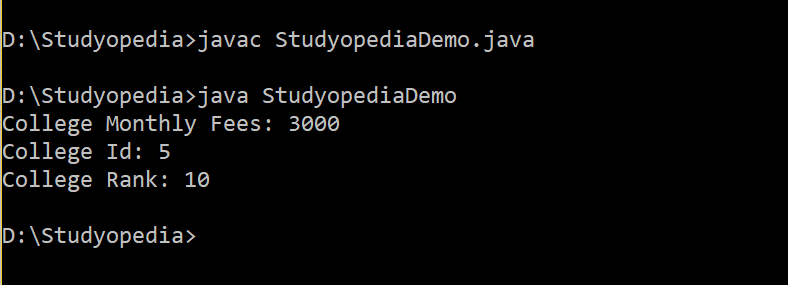
Here’s the output for the above program, which shows the usage of Java variables:
If you liked the tutorial, spread the word and share the link and our website, Studyopedia, with others.
For Videos, Join Our YouTube Channel: Join Now
Read More:

No Comments