

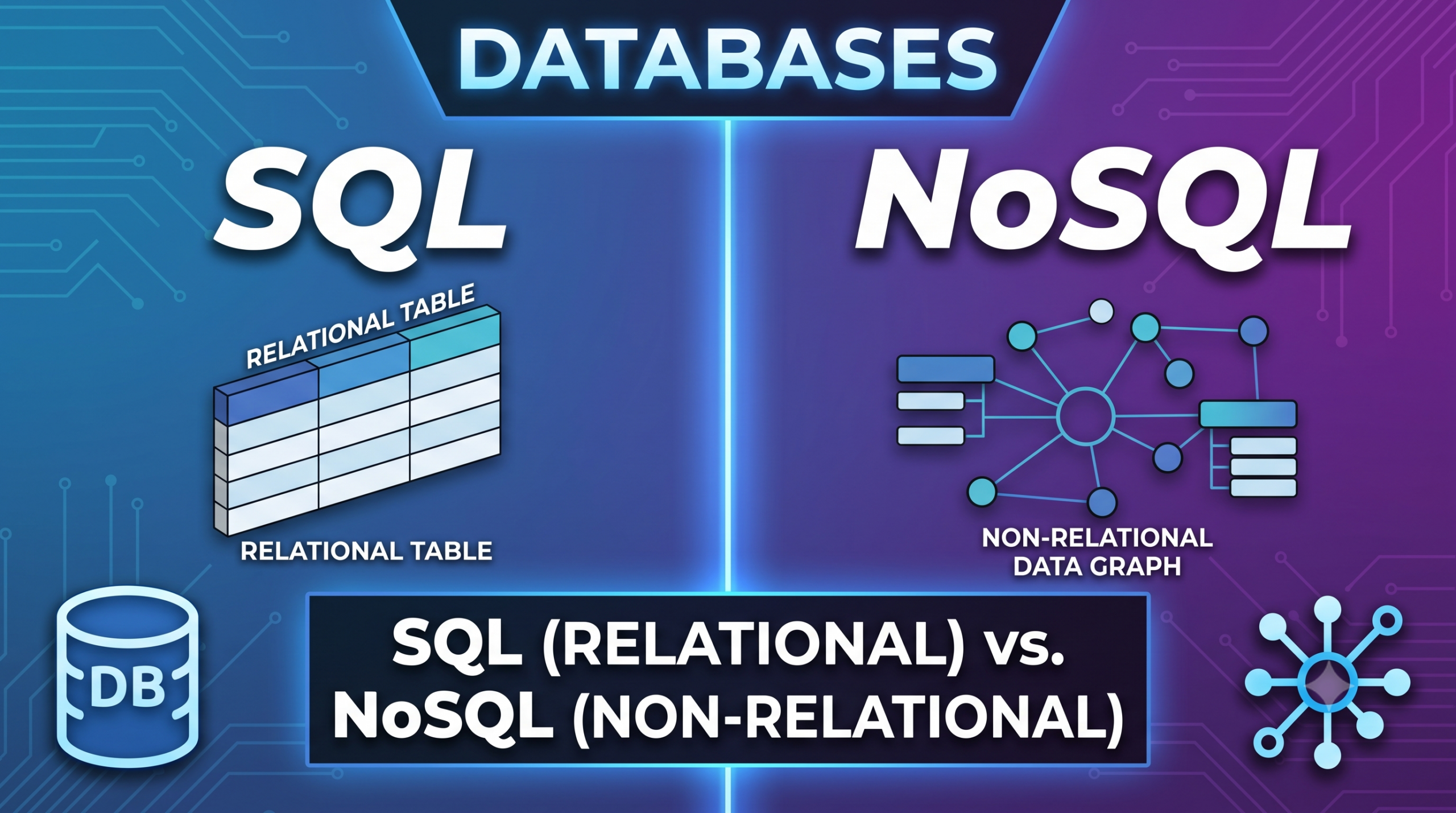
27 Sep SQL (Relational) vs. NoSQL (Non-Relational): What’s the Difference?
SQL (Relational Databases)
SQL (Structured Query Language) databases are relational systems that organize data into fixed tables, rows, and structured columns. They enforce strict schema definitions alongside ACID (Atomicity, Consistency, Isolation, Durability) transactions to ensure high data integrity. SQL solutions like PostgreSQL and MySQL are commonly used for handling financial, operational, and highly transactional data models.
- Focus: Structured database management systems (such as PostgreSQL, MySQL, and Oracle) that organize data into rigid tables with defined rows and columns, enforcing relationships through primary and foreign keys and guaranteeing transactional integrity via strict ACID compliance.
- Difference from NoSQL: SQL databases require a predefined, static schema where data structure must be designed before inserting records, whereas NoSQL databases feature dynamic, schema-less structures that adapt to evolving data models on the fly. Additionally, SQL databases primarily scale vertically (adding more CPU, RAM, and storage to a single server), whereas NoSQL databases are architected from the ground up to scale horizontally (sharding and distributing data across hundreds or thousands of commodity servers).
NoSQL (Non-Relational Databases)
NoSQL databases are non-relational storage systems engineered to handle unstructured, semi-structured, or rapidly shifting data models at scale. They offer flexibility by utilizing document, key-value, column-family, or graph architectures instead of standard tabular schemas. NoSQL systems like MongoDB and Cassandra trade strict ACID guarantees for horizontal scalability and fast write operations.
- Focus: Non-tabular database systems (such as MongoDB, Cassandra, Redis, and Neo4j) designed to store and manage unstructured, semi-structured, or rapidly changing data across various models like document, key-value, wide-column, or graph formats.
- Difference from SQL: NoSQL databases prioritize high-throughput scalability, continuous availability, and schema flexibility over complex multi-table joins and strict relational integrity. Rather than relying on strict ACID guarantees across all operations, NoSQL systems often use BASE consistency models (Basically Available, Soft-state, Eventual consistency), making them capable of handling massive velocity and volume across distributed networks far more efficiently than traditional SQL setups.
Frequently Asked Questions (FAQs)
Q1: Can NoSQL databases support ACID transactions like SQL databases? Yes. While early NoSQL databases sacrificed ACID compliance for pure performance and scale, many modern NoSQL databases (like MongoDB and Amazon DynamoDB) now offer multi-document, distributed ACID transactions. However, complex ACID operations in NoSQL can introduce performance overhead compared to native relational engines.
Q2: Should I pick SQL or NoSQL for a financial or banking application? SQL (Relational) databases are traditionally preferred for financial, ledger, and transactional applications. Their strict, predefined schemas prevent invalid data states, and native multi-table ACID compliance ensures operations (like balance transfers) execute with absolute reliability without risk of partial updates or data corruption.
Q3: What does “polyglot persistence” mean, and can I use both SQL and NoSQL in the same project? Polyglot persistence means using different database technologies for different subsystems within a single application architecture. It is very common in modern enterprise systems to use a SQL database for core relational domain data (user accounts, orders, billing) alongside NoSQL stores for specific tasks—such as Redis for low-latency Caching/Sessions, Elasticsearch for full-text Search, or MongoDB for unstructured User Activity logs.
If you liked the tutorial, spread the word and share the link and our website, Studyopedia, with others.
For Videos, Join Our YouTube Channel: Join Now
Read More:

No Comments