

27 Sep AWS vs. Microsoft Azure vs. Google Cloud Platform: What’s the Difference?
Amazon Web Services (AWS)
Amazon Web Services (AWS) is the pioneer and market leader in public cloud computing, offering a wide array of cloud services. Its global network spans compute engines, managed serverless architectures, relational storage, and enterprise infrastructure options. AWS provides granular security controls and extensive service combinations tailored to organizations of all scales.
- Focus: The pioneer and global market leader in public cloud infrastructure, offering an expansive catalog of over 200 fully featured, highly scalable services spanning compute, storage, databases, and serverless computing.
- Difference from Microsoft Azure: AWS prioritizes open-source ecosystem support, flexible third-party integrations, and granular developer tooling. Microsoft Azure, by contrast, focuses heavily on native integration with the Microsoft ecosystem (Active Directory, Windows Server, Office 365, .NET) and enterprise hybrid-cloud management.
- Difference from Google Cloud Platform (GCP): AWS provides a much broader service portfolio, deeper global infrastructure reach, and a larger talent market than GCP. However, GCP typically offers simpler billing structures (with automatic sustained-use discounts) and leads in native container orchestration (GKE) and big data execution.
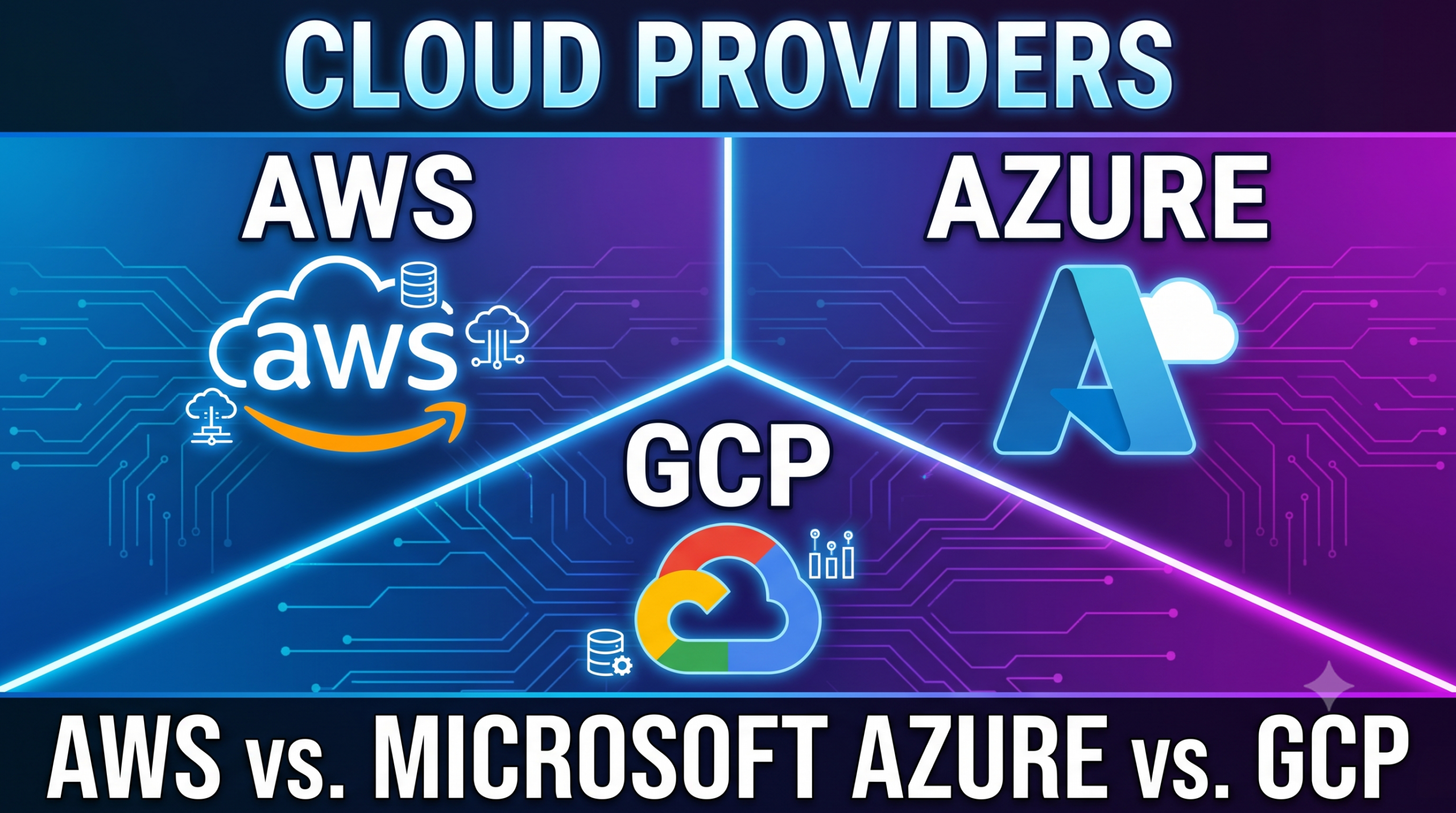
Microsoft Azure
Microsoft Azure is a major public cloud platform, tightly integrated with Microsoft’s enterprise software ecosystem, Active Directory, and Windows Server infrastructure. It offers hybrid cloud deployments, allowing enterprises to connect on-premises data centers directly with public cloud resources. Azure features robust PaaS capabilities alongside specialized tools for enterprise cloud migrations.
- Focus: An enterprise-first cloud platform engineered for seamless hybrid-cloud operations, identity management, and native corporate IT integration.
- Difference from AWS: Azure dominates hybrid-cloud deployments and enterprise software migrations through tools like Azure Arc and Azure Hybrid Benefit discounts, whereas AWS relies heavily on cloud-native architectures and its own managed serverless platforms (like AWS Lambda).
- Difference from Google Cloud Platform (GCP): Azure relies on enterprise relationship selling, legacy licensing agreements, and tight ties with enterprise products (Active Directory, Windows, Dynamics). GCP, conversely, focuses on open-source frameworks, modern cloud-native developer workflows, and cutting-edge data/AI infrastructure.
Google Cloud Platform (GCP)
Google Cloud Platform (GCP) is a public cloud provider recognized for its expertise in big data analysis, machine learning workflows, and container orchestration. It leverages Google’s internal network infrastructure to provide reliable, low-latency connectivity across global regions. GCP excels in analytics and container management through native integrations with services like BigQuery and Google Kubernetes Engine.
- Focus: A developer-centric, high-performance cloud platform built around big data analytics, machine learning, and native Kubernetes container management.
- Difference from AWS: GCP focuses on streamlined, developer-friendly UX and specialized, high-performance engines (such as BigQuery for data warehousing and Vertex AI for ML), rather than providing AWS’s massive, highly granular 200+ service ecosystem.
- Difference from Microsoft Azure: GCP is designed around cloud-native, open-source technology paradigms (such as Kubernetes and TensorFlow) rather than traditional Windows-based enterprise software stacks, making it the preferred choice for data engineering and AI-first startups.
Frequently Asked Questions (FAQs)
Q1: Which cloud provider is the cheapest among AWS, Azure, and GCP? Headline prices across all three providers are very competitive. However, GCP is often viewed as the most cost-friendly for variable workloads due to its automatic sustained-use discounts (which apply without long-term commitments). Azure is typically the most cost-effective for enterprise businesses that already own Windows Server or SQL Server licenses (via Azure Hybrid Benefit). AWS relies heavily on 1-to-3-year Reserved Instances or Savings Plans to offer maximum discounts.
Q2: Can a business run workloads across multiple cloud providers at the same time? Yes, this strategy is known as a Multi-Cloud Architecture. Many modern organizations run their core application backend on AWS, use GCP for BigQuery-powered AI and data analytics, and use Azure for corporate identity management (Entra ID / Active Directory) and Microsoft 365 software integrations.
Q3: Which cloud provider is best for startups vs. large enterprises?
-
Startups frequently pick AWS or GCP. AWS offers the largest startup credit programs (like AWS Activate) alongside the biggest pool of developers, while GCP offers quick developer onboarding, excellent managed Kubernetes, and lower compute costs.
-
Large Enterprises (especially in finance, healthcare, and legacy corporate sectors) frequently pick Azure due to its deep compliance tooling, hybrid-cloud solutions, and direct integration into existing enterprise Microsoft contracts.
If you liked the tutorial, spread the word and share the link and our website, Studyopedia, with others.
For Videos, Join Our YouTube Channel: Join Now
Read More:

No Comments