

02 Sep Generative AI for Movies
Generative Artificial Intelligence is initiating a profound transformation in cinematic storytelling, visual effects (VFX), storyboarding, and post-production workflows. Traditionally, creating high-concept feature films required multi-million-dollar budgets, massive physical crews, complex location logistics, and months of painstaking visual effects editing.
Generative AI tools democratize and streamline this creative lifecycle by giving filmmakers, directors, and VFX artists the ability to generate photorealistic video sequences, render shot-by-shot storyboards from scripts, execute complex camera movements, and edit visual elements using natural language. Rather than replacing human artistry, generative AI functions as a digital studio assistant; allowing independent creators to achieve Hollywood-scale production values and enabling major studios to prototype, visualize, and edit high-concept cinematic sequences in a fraction of the time.
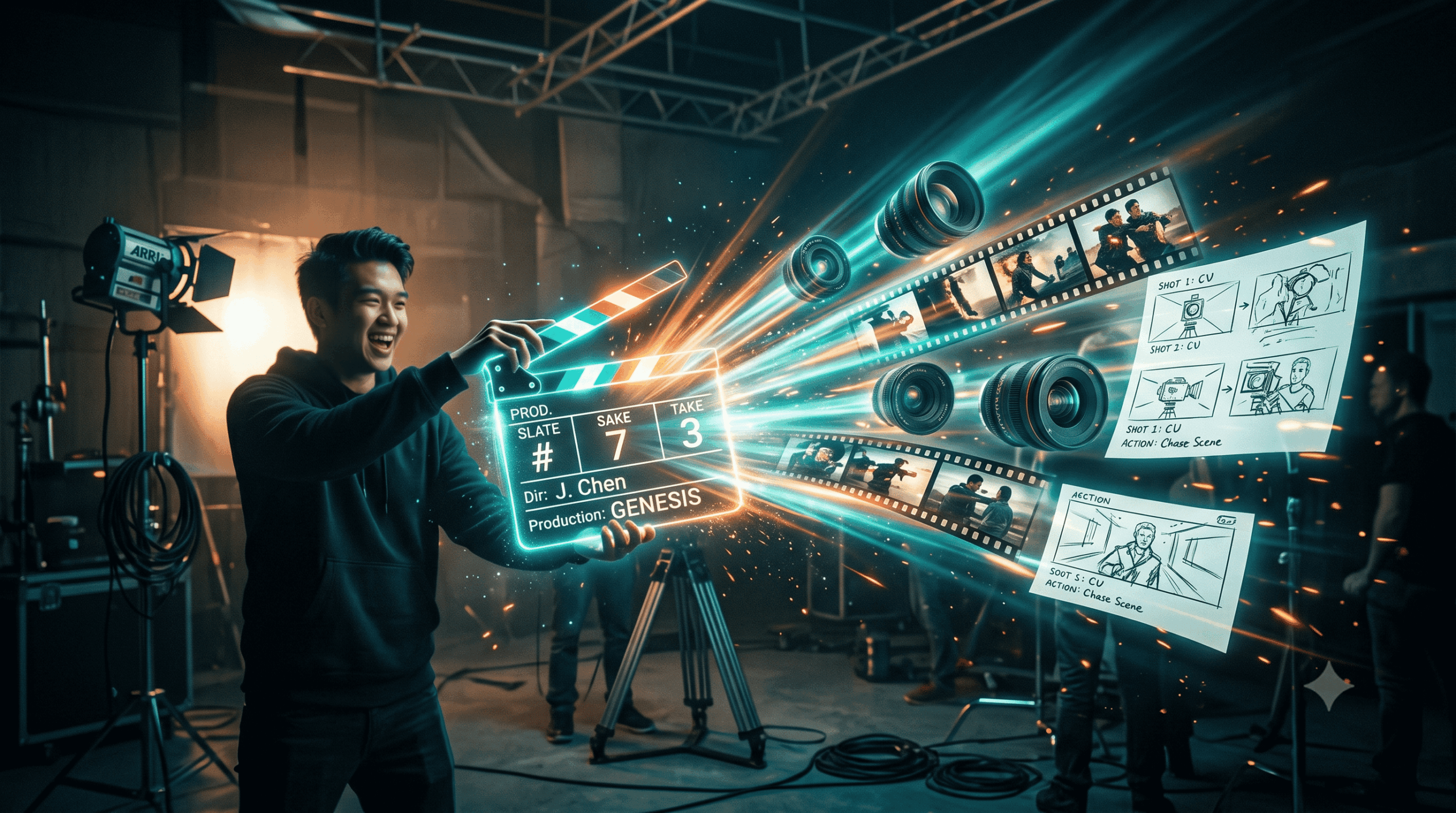
Below are five top Generative AI platforms redefining modern filmmaking.
Top 5 Generative AI Tools for Movies
1. LTX Studio (by Lightricks)
LTX Studio is an end-to-end AI filmmaking platform that gives directors complete control over cinematic storytelling, character consistency, shot angles, and multi-scene storyboarding.
Key Features:
- Script-to-Storyboard Generation: Converts a complete movie script into a visual, shot-by-shot storyboard with matching camera angles and scene framing.
- Character & Environment Consistency: Ensures that generated actors, costumes, and virtual sets maintain consistent visual details across multiple scenes and lighting changes.
- Directorial Camera Controls: Allows creators to adjust camera motion, shot scale (e.g., wide shot, close-up), and lighting setups using intuitive visual controls.
- Generative Audio & Sound FX: Synthesizes cinematic sound effects, ambient background audio, and temp voiceover tracks aligned with generated visual clips.
Pricing: Freemium (Free trial credits available; Lite tier starts around $12/month; higher tiers available for production concurrency).
2. OpenAI Sora
OpenAI Sora is a groundbreaking text-to-video foundation model designed to generate complex cinematic scenes featuring detailed camera motion, multiple characters, and accurate physical interactions.
Key Features:
- Photorealistic High-Definition Video: Generates cinematic 1080p video clips up to a minute long from detailed natural language prompts.
- Complex Spatial & Physical World Modeling: Simulates physical momentum, lighting reflections, and material textures accurately across consecutive frames.
- Multi-Shot Camera Continuity: Maintains consistent character appearance and visual style across changing camera angles within a single video clip.
- Video Inpainting & Extension: Extends existing video clips backward or forward in time and seamlessly replaces visual elements within a scene.
Pricing: Paid (Integrated into OpenAI’s enterprise and premium subscription tiers; custom usage billing for high-resolution video renders).
3. Runway (Gen-2 / Gen-3 Alpha)
Runway remains a primary choice for professional filmmakers, offering advanced generative video generation alongside a suite of AI-driven post-production tools.
Key Features:
- Motion Brush & Trajectory Control: Enables filmmakers to paint over specific regions of a static frame and dictate precise directional movement vectors.
- Gen-3 Alpha Text/Image-to-Video: Produces hyper-realistic cinematic sequences with expressive human emotions, fluid camera moves, and complex lighting transitions.
- Advanced Green Screen & Inpainting: Automatically removes video backgrounds, isolates characters, and erases unwanted set equipment without manual rotoscoping.
- Camera Director Mode: Provides precise control over pan, tilt, zoom, and push-in speed parameters for generated shots.
Pricing: Freemium (Free plan available with limited generation credits; Standard plan starts at $12/user/month; Unlimited plan at $76/user/month).
4. Google Veo (integrated via Flow)
Google Veo is a state-of-the-art generative video model optimized for cinematic output, high visual coherence, and precise adherence to complex cinematic terminology.
Key Features:
- Understanding of Film Terminology: Interprets cinema jargon (e.g., “timelapse,” “aerial drone tracking shot,” “match cut,” “cinematic lighting”) to execute precise stylistic requests.
- Native Synchronized Audio: Generates natural background ambient audio and sound effects perfectly synchronized with generated video movement.
- High Frame-Rate Consistency: Minimizes visual distortion, morphing artifacts, and temporal flickering across high-action video sequences.
- Seamless Editing & Masking: Allows filmmakers to edit specific visual areas of a shot using text prompts while preserving the rest of the frame.
Pricing: Freemium (Access provided via Google AI Studio and Gemini tiers; structured credit-based usage).
5. Adobe Firefly Video Model (integrated in Premiere Pro)
Adobe’s Firefly Video Model brings generative AI directly into industry-standard editing software like Premiere Pro, focusing on commercially safe visual generation and workflow efficiency.
Key Features:
- Generative B-Roll Insertion: Generates missing cutaway shots, atmospheric b-roll, and background footage directly inside the timeline editor.
- Generative Extension: Extends video clips by a few frames to fill timing gaps in edits or smooth out difficult scene transitions.
- Text-to-VFX Effects: Synthesizes visual effects elements (such as fire, smoke, atmospheric fog, or particle effects) ready for composite masking.
- 100% Commercially Safe Training: Trained exclusively on licensed Adobe Stock and public domain content, guaranteeing copyright indemnification for major movie studios.
Pricing: Freemium / Subscription (Integrated directly into Adobe Creative Cloud plans; Firefly standalone plans start around $9.99/month).
Conclusion
Generative AI is democratizing cinematic storytelling, granting filmmakers and visual artists Hollywood-level production capabilities regardless of budget constraints. Directors can generate shot-by-shot visual storyboards directly from script text, maintaining consistent character appearances and camera movements across multi-scene sequences. Advanced video generation models simulate realistic physics, complex camera trajectories, and atmospheric visual effects without expensive physical sets or manual rotoscoping. In post-production, AI tools extend video clips, synthesize dynamic b-roll, and streamline visual effects compositing directly on the timeline. Ultimately, GenAI acts as a digital studio multiplier, empowering creative storytellers to turn visionary concepts into cinematic reality.

No Comments