

02 Sep Generative AI for Developers
Software engineering is undergoing its largest structural evolution since the transition from machine code to high-level programming languages. Generative AI tools for developers have transformed software construction from manual boilerplate authoring into intent-driven architecture and agentic execution. Rather than replacing developers, modern generative AI functions as a force multiplier: writing repetitive code, suggesting intelligent refactoring across complex multi-file projects, converting plain language requirements into functional unit tests, and detecting potential security risks before deployment.
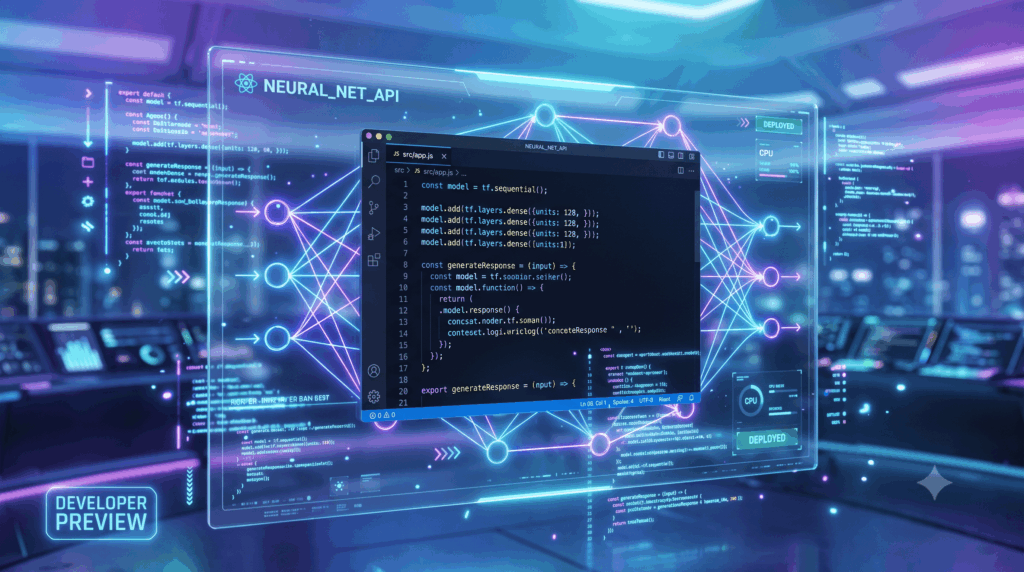
The integration of Large Language Models (LLMs) directly into IDEs allows software engineers to spend significantly more time solving structural architectural problems while offloading syntactical boilerplate to intelligent assistants.
The following five tools represent the current peak of AI-assisted engineering for modern software developers.
Top 5 Generative AI Tools for Developers
1. Cursor
Cursor is an AI-first code editor forked directly from VS Code that integrates agentic, multi-file code execution deep into the core editing workflow.
Key Features:
- Agentic Multi-File Editing: Edits multiple project files autonomously based on high-level natural language instructions, generating file structures and resolving syntax errors independently.
- Deep Codebase Indexing: Indexes entire local and remote repositories to provide contextual code suggestions based on the full project structure rather than just open tabs.
- Multi-Model Orchestration: Allows developers to toggle dynamically between frontier models (such as Claude, GPT-4, or custom models) on a per-task basis.
- Terminal Auto-Fix: Intercepts terminal compilation errors, diagnoses stack traces, and suggests inline terminal commands to resolve build issues.
Pricing: Freemium (Free tier available; Pro plan at $20/month; Team plan at $40/user/month).
2. GitHub Copilot
GitHub Copilot remains the gold standard for enterprise developer integration, providing autocomplete, conversational assistance, and automated pull-request summaries directly inside mainstream IDEs.
Key Features:
- Universal Extension Support: Integrates into VS Code, JetBrains IDEs, Neovim, and Xcode.
- Multi-Model Copilot Chat: Enables inline code generation using a choice of underlying models, including OpenAI models, Anthropic Claude, and Google Gemini.
- Automated Pull-Request Generation: Synthesizes code diffs into clear, human-readable PR descriptions and documentation summaries directly inside GitHub.
- Enterprise IP Indemnification: Provides enterprise teams with commercial indemnification coverage against legal copyright claims on AI-suggested code snippets.
Pricing: Freemium (Free tier with monthly usage limits; Individual tier at $10/month; Business tier at $19/user/month; Enterprise at $39/user/month).
3. Codeium (Windsurf IDE)
Codeium (and its flagship agentic IDE, Windsurf) provides an ultra-fast, privacy-conscious AI coding environment equipped with deep contextual reasoning capabilities.
Key Features:
- Cascade Agentic Flow: Tracks developer context across real-time interactions, deep memory, and terminal logs to execute sweeping refactoring tasks smoothly.
- Generative Test Creation: Reads source code files and generates unit tests, mock data, and edge-case assertion suites automatically.
- In-Line Supercomplete: Uses proprietary lightweight models to predict complex multi-line logic and variable assignments as you type with sub-100ms latency.
- SOC 2 Type II Compliance: Ensures proprietary developer code is never retained on external servers or used for public foundation model training.
Pricing: Freemium (Generous free tier for individual developers; Pro plans starting at $10/month; custom enterprise pricing).
4. Amazon Q Developer
Amazon Q Developer is a generative AI assistant explicitly optimized for cloud infrastructure engineering, AWS service management, and enterprise software modernizations.
Key Features:
- Automated Language Upgrades: Performs agentic repository modernizations, such as automatically upgrading legacy Java application codebases to modern Java versions.
- AWS Infrastructure as Code (IaC) Synthesis: Generates, validates, and debugs Terraform, AWS CDK, and CloudFormation scripts from natural language descriptions.
- Architectural Guidance: Answers complex queries about cloud security configurations, IAM policies, and VPC architecture using up-to-date AWS documentation.
- Inline Vulnerability Scanning: Scans real-time generated code for hardcoded secrets, SQL injection paths, and OWASP Top 10 security vulnerabilities.
Pricing: Freemium (Free tier available; Pro plan at $19/user/month).
5. Tabnine
Tabnine focuses on complete code privacy, offline deployments, and zero data leakage, making it the premier generative AI tool for regulated enterprises.
Key Features:
- Permissive-Only Model Training: Trained exclusively on open-source code with fully permissive licenses (MIT, Apache 2.0), avoiding IP issues.
- On-Premises Air-Gapped Deployment: Can be hosted entirely on internal enterprise hardware or private clouds without sending telemetry externally.
- Custom Fine-Tuning: Continuously adapts to an enterprise’s internal coding style, private APIs, and custom software patterns.
- Contextual Auto-Completions: Delivers real-time statement completions across over 80 programming languages and major frameworks.
- Pricing: Paid (Pro plan starts at $12/user/month; enterprise custom pricing for air-gapped hosting).
Conclusion
The integration of Generative AI into software engineering has elevated developers from manual syntax typists to high-level system architects. Agentic IDEs and AI coding copilots handle tedious boilerplate code, execute multi-file refactoring, and generate unit tests in real time. This shift dramatically reduces context switching and shortens sprint cycles while keeping developers in a continuous state of creative flow.
Beyond basic autocomplete, domain-specific AI models automate cloud infrastructure scripts and security vulnerability checks before deployment. Modern software development is no longer bound by syntax bottlenecks, enabling engineering teams to build, test, and ship complex applications faster than ever.

No Comments