

02 Sep Generative AI for Manufacturing
Generative Artificial Intelligence is driving the fourth industrial revolution, moving beyond basic automation and predictive maintenance into creative design, real-time optimization, and synthetic quality control. Traditional manufacturing relies on sequential engineering processes, where design iterations, prototyping, structural testing, and production planning take months.
Generative AI fundamentally compresses this timeline by algorithmically evaluating thousands of structural, material, and operational constraints simultaneously. From lightweighting components in aerospace to automated computer-aided design (CAD) generation and synthetic defect training in automated quality inspection, GenAI tools are transforming physical manufacturing floors into agile, software-defined environments.
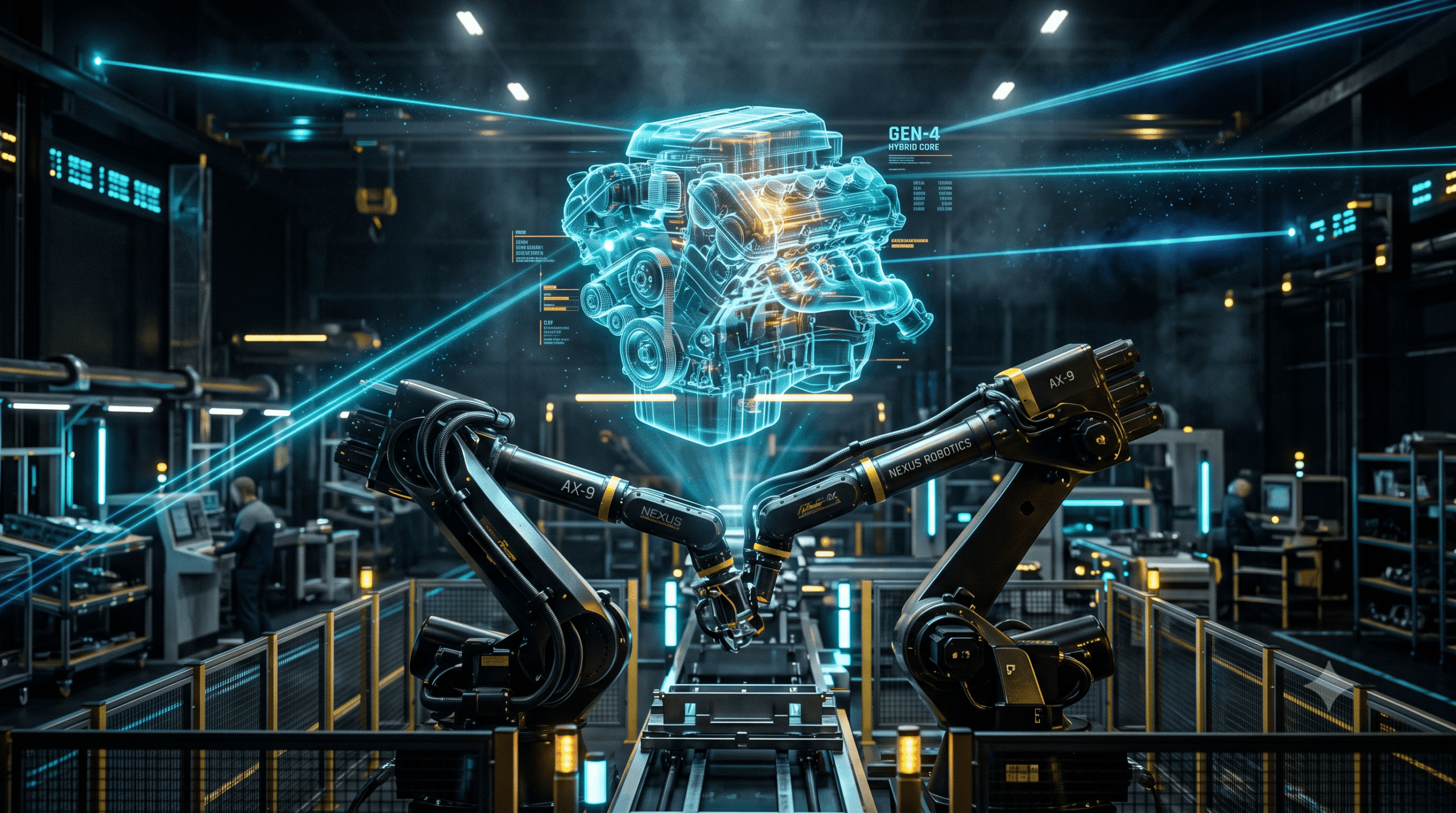
Below are five top Generative AI tools transforming modern manufacturing, complete with their features, capabilities, and pricing models.
Top 5 Generative AI Tools for Manufacturing
1. Autodesk Fusion (Generative Design Engine)
Autodesk Fusion’s Generative Design tool allows engineers to input basic structural constraints, material parameters, manufacturing methods, and cost limits to algorithmically synthesize hundreds of production-ready 3D cad models.
Key Features:
- Multi-Method Manufacturing Optimization: Generates geometry tailored specifically for CNC milling, 3D additive printing, die casting, or sheet metal fabrication.
- Natural Language CAD Prompting: Engineers can describe functional boundaries, weight thresholds, and load orientations conversationally to generate viable CAD structures.
- Automated Cost Estimation: Calculates projected production expenses per unit by evaluating material volume, cycle time, and tool access requirements during design generation.
- Material Light-Weighting: Algorithms automatically reduce mass while preserving or improving yield strength and structural integrity, crucial for aerospace and automotive sectors.
Pricing: Paid (Commercial tiers range from $500 to $2,000+/year per user; advanced cloud generative solves run on Autodesk Flex tokens).
2. Siemens NX Generative Design
Siemens NX offers advanced industrial generative capabilities designed for large-scale enterprise manufacturing, heavy machinery, and high-precision mechanical engineering.
Key Features:
- Convergent Modeling: Seamlessly merges generated polygonal mesh geometry directly into traditional parametric CAD models without requiring manual surface conversion.
- Design for Manufacturability (DFM) Feedback: Generates instant diagnostic feedback on draft angles, minimum wall thicknesses, and tool clearance paths during design generation.
- Tolerance & Stress Analysis Integration: Evaluates physical deformation, thermal dynamics, and structural loads using integrated physics algorithms during geometry synthesis.
- Additive Topology Optimization: Creates variable-density lattice structures optimized for 3D metal printing.
Pricing: Paid (Enterprise custom tier; typically sold via custom quote and software licensing packages).
3. nTopology (nTop)
nTopology is an advanced generative design platform engineered primarily for high-performance engineering applications, complex additive manufacturing, and advanced materials engineering.
Key Features:
- Implicit Modeling Engine: Processes extremely complex mathematical geometry natively without breaking computational memory limits.
- Field-Driven Design: Allows engineers to dictate component density, thermal dissipation, and stiffness dynamically across a 3D volume using physics data fields.
- Conformal Heat Exchanger Generation: Automatically creates high-efficiency fluid and thermal cooling channels for turbine engines and power electronics.
- Reusable Generative Workflows: Enables teams to save complex generative algorithms as templates and run automated batch designs across entire component libraries.
Pricing: Paid (Commercial enterprise licensing starts at roughly $10,000+/year).
4. Overview.ai Auto Defect Creator
Overview.ai utilizes generative deep learning to solve one of the visual quality inspection industry’s biggest challenges: the lack of physical defective product samples for training vision systems.
Key Features:
- Synthetic Defect Image Generation: Generates photorealistic images of rare structural defects, surface scratches, solder voids, and fractures using as few as 5 physical reference photos.
- Automated Inspection Model Training: Synthesizes training data instantly, enabling visual quality inspection models to deploy on assembly lines in hours rather than months.
- Domain-Specific Fine-Tuning: Supports specialized industrial defect creation across automotive, electronic assembly, and medical equipment manufacturing.
- Zero-Shot Anomaly Pre-Training: Automatically generates non-standard variations of acceptable products to lower false-positive flags on line sensors.
Pricing: Paid (Enterprise subscription based on deployed inspection points and camera hardware configurations).
5. Ansys SimAI
Ansys SimAI combines generative machine learning with high-performance computational fluid dynamics (CFD) and finite element analysis (FEA) to predict physical performance instantly.
Key Features:
- Near Real-Time Physics Prediction: Predicts stress concentrations, heat dissipation, and airflow over novel physical shapes in seconds instead of waiting days for conventional simulation solvers.
- Generative Performance Optimization: Generates structural adjustments automatically to overcome identified physical weak points before physical prototyping begins.
- Multiphysics Synthesis: Simulates structural, thermal, and fluid dynamics simultaneously under variable load profiles.
- Legacy Data Learning: Learns directly from an organization’s existing simulation archives to build proprietary custom performance prediction models.
Pricing: Paid (Enterprise quote based on computational usage and node licensing).
Conclusion
Generative AI is shifting manufacturing from rigid, sequential assembly to hyper-agile, software-driven production. By algorithmically optimizing CAD models, lightweighting structural components, and predicting material stress before physical prototyping begins, tools in this sector drastically reduce engineering cycles and material waste. Synthetic defect generation enhances computer vision on assembly lines, allowing quality assurance to adapt instantly to dynamic production shifts. As generative design merges with computational physics and digital twins, industrial enterprises gain unprecedented speed in bringing complex hardware to market. Ultimately, GenAI equips manufacturers to maintain high precision while building flexible, resilient supply chains.

No Comments