

07 Oct Forward Deployed Engineer (FDE) Roadmap
Forward Deployed Engineers (FDEs) operate directly at the intersection of complex software engineering and high-stakes client deployment. Popularized by tech enterprises like Palantir, the FDE role embeds deeply within client organizations to customize core software platforms, integrate legacy systems, build specialized data pipelines, and translate messy real-world enterprise problems into scalable technical products.
This comprehensive roadmap presents a step-by-step guide to becoming a successful Forward Deployed Engineer, covering software engineering foundations, data integration architecture, client communication tactics, security compliance, and product feedback loops.
Visual Skill Roadmap and Flowchart
Below is a visual step-by-step path outlining the core technical and strategic progression required to master the Forward Deployed Engineering role.
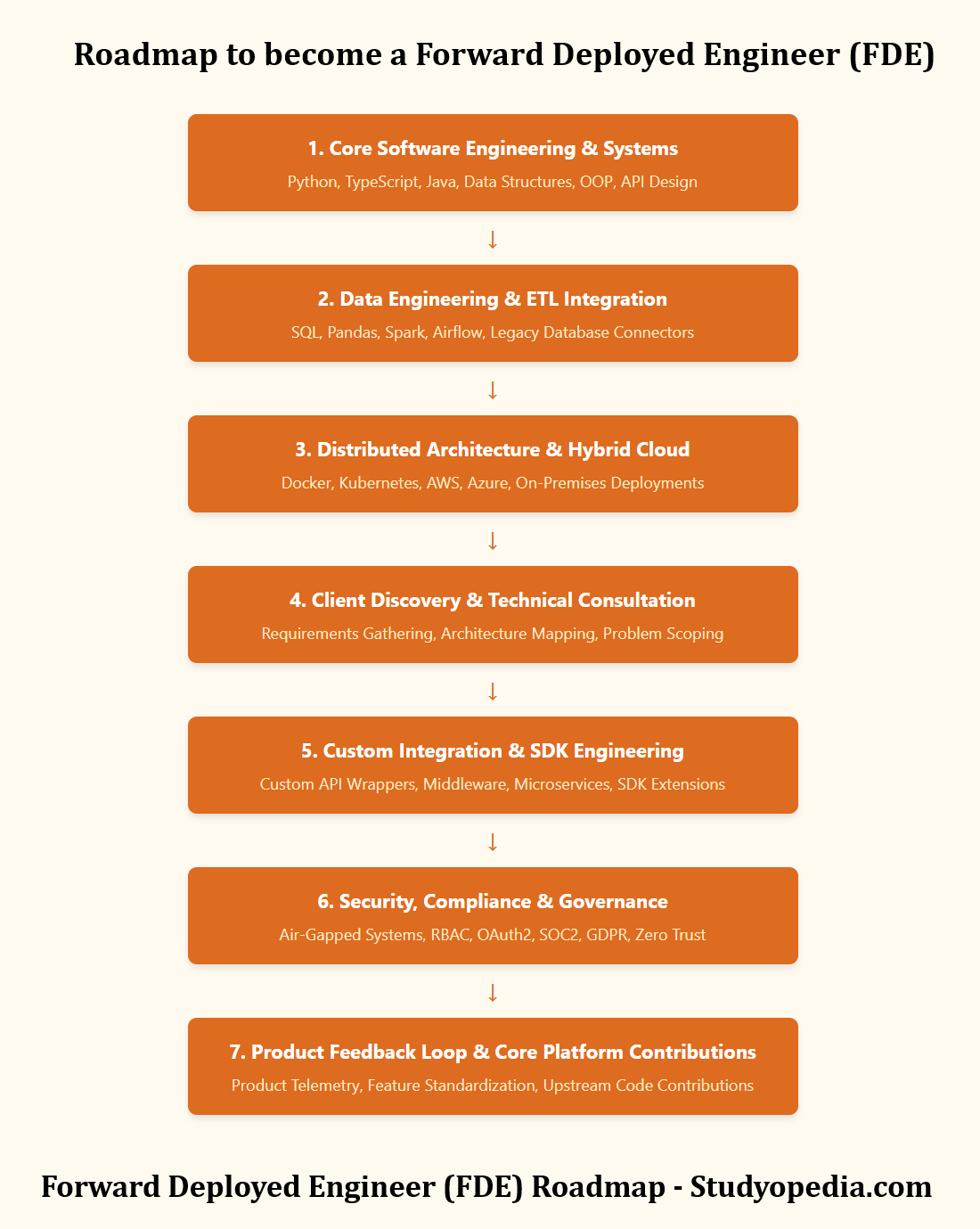
Step-by-Step Forward Deployed Engineer Roadmap
1. Core Software Engineering and Programming Mastery
An FDE is first and foremost a versatile software engineer who can jump into unfamiliar codebases, debug complex production issues on the fly, and write production-grade code quickly.
- Multi Language Proficiency: Strong expertise in Python for rapid data processing and scripting, along with compiled languages like Java, Go, or C++ used in core backend platforms.
- Frontend and API Fundamentals: Proficiency in JavaScript/TypeScript (React) for modifying user interface components and building custom workflow dashboards for client end users.
- System Fundamentals: Deep knowledge of object oriented design, REST and gRPC API designs, unit testing, and Git code management workflows.
2. Enterprise Data Engineering and Ingestion Pipelines
A huge part of an FDE’s mission involves connecting central platform products to messy, fragmented, and legacy enterprise data sources.
- Data Wrangling and Transformation: Cleaning and normalizing unstructured client data using Python libraries such as Pandas and NumPy.
- Distributed Processing: Running large scale batch transformations with Apache Spark and PySpark when handling petabyte scale enterprise workloads.
- Pipeline Orchestration: Building automated ingestion pipelines and directed acyclic graphs (DAGs) with Apache Airflow or Prefect.
- Legacy Database Systems: Querying and extracting datasets from traditional relational databases (Oracle, PostgreSQL, SQL Server) as well as mainframes.
3. Cloud Infrastructure, Hybrid Cloud, and Containerization
Client environments vary wildly. An FDE must deploy software seamlessly across modern cloud infrastructure as well as strict on-premises datacenters.
- Containerization: Packaging microservices and integration scripts cleanly into Docker containers to guarantee environment consistency.
- Orchestration and Deployment: Managing containerized applications inside Kubernetes clusters and writing Helm charts for repeatable client deployments.
- Multi-Cloud and On-Premises Architecture: Deploying platform components across AWS, Microsoft Azure, Google Cloud Platform, or private air-gapped corporate servers.
Key Insight for Forward Deployed Engineers
The best Forward Deployed Engineers resist the urge to build custom bespoke hacks for every single client. Instead, they design modular integration extensions and advocate for pushing high value client solutions directly into the core upstream product platform.
4. Client Discovery, System Scoping, and Solution Architecture
Technical skill alone is not enough. FDEs work face to face with client executives, operational domain experts, and internal IT teams to convert business goals into concrete technical blueprints.
- Technical Scoping: Interviewing client stakeholders to identify root operational bottlenecks, mapping out existing software dependencies, and defining project deliverables.
- Solution Architecture Design: Crafting system architecture diagrams detailing data flows, network boundaries, authentication handshakes, and platform extension points.
- Technical Communication: Explaining complex software architecture concepts clearly to non technical executive leaders while retaining technical depth with client engineering leads.
5. Custom Extension Engineering and API Middleware
Core software products rarely fit every enterprise constraint out of the box. FDEs build custom software bridges that extend core platform functionality.
- Middleware Development: Building custom API wrappers, event listeners, and webhooks to synchronize central platform states with client legacy tools.
- SDK Usage and Extension: Extending platform SDKs to support client specific data types, specialized analytics algorithms, or specialized reporting modules.
- Rapid Prototyping: Designing functional proof of concept (PoC) software applications in days to demonstrate business value before embarking on full production rollouts.
6. Enterprise Security, Privacy, and Regulatory Compliance
FDEs often deploy systems inside highly regulated domains including defense, healthcare, finance, and intelligence agencies.
- Authentication and Access Control: Integrating enterprise identity providers (IdP) using OAuth2, OIDC, SAML, and implementing granular Role-Based Access Control (RBAC).
- Compliance Frameworks: Structuring deployments to adhere strictly to industry standards such as SOC2, GDPR, HIPAA, and FedRAMP.
- Air-Gapped and Zero Trust Systems: Executing software deployments in completely disconnected air-gapped network environments with restricted external internet access.
7. Upstream Product Engineering and Feedback Loops
FDEs act as the voice of the customer inside their own engineering organization, helping shape the core platform roadmap based on real world field observations.
- Product Standardization: Identifying repetitive custom integration requests and abstracting them into core platform features.
- Upstream Code Contributions: Submitting pull requests directly to internal product engineering codebases to fix bugs or optimize performance based on field deployments.
- Field Telemetry and Monitoring: Setting up logging, error tracking (Sentry), and performance metrics (Prometheus and Grafana) across deployed environments.
Conclusion and Next Steps
Becoming a Forward Deployed Engineer requires an equal balance of elite software engineering craftsmanship, systemic problem solving, and adaptive client communication. Begin by mastering core backend development, SQL, and Docker containerization. Next, gain experience building data pipelines and API integrations before honing your system design and enterprise consultation skills.
If you liked the tutorial, spread the word and share the link and our website, Studyopedia, with others.
For Videos, Join Our YouTube Channel: Join Now
Recommended Posts

No Comments